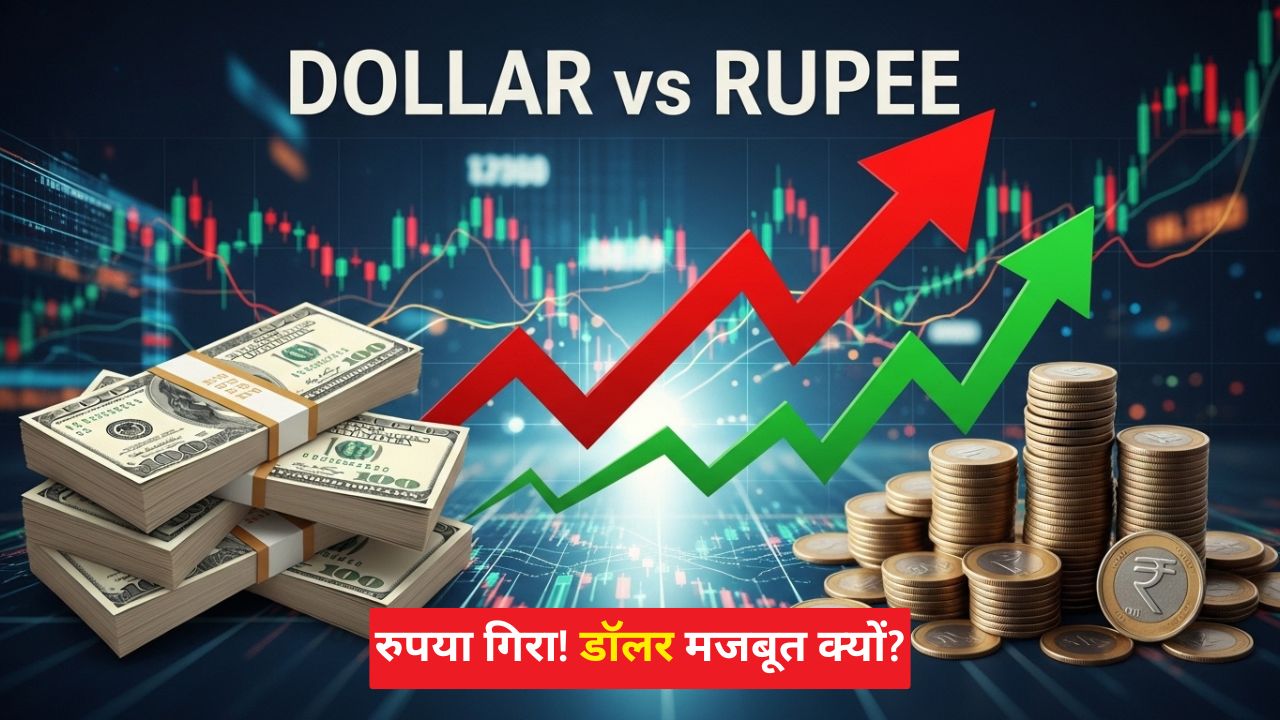
The Dollar vs Rupee battle is once again in the spotlight as the Indian rupee weakened slightly against the US dollar in early trade on Wednesday. Currency markets may look boring to the average person, but this tiny movement of a few paise can have a massive impact on fuel prices, inflation, foreign education costs, and even your smartphone bill.
According to reports, the rupee opened at around ₹90.56 per dollar and slipped to ₹90.62, marking a fall of six paise in early trade. The decline came despite a positive trend in domestic stock markets and renewed foreign investor interest.
So, what is really happening in the Dollar vs Rupee story—and why should ordinary Indians care?
Dollar Vs Rupee Today: What Happened in the Market?
The Indian rupee weakened against the US dollar in early trading hours, even though the Sensex and Nifty opened in the green. The dollar index, which measures the US currency against six major global currencies, remained relatively stable, while crude oil prices edged higher in global markets.
Forex experts say that dollar demand from importers, rising crude oil prices, and global uncertainty continue to put pressure on the rupee. Meanwhile, foreign portfolio investors (FPIs) have invested nearly $2 billion in Indian equities this month, which helped prevent a sharper fall.
In simple terms, the rupee is not crashing—but it is struggling to gain strength against the powerful greenback.
Why Is Dollar vs Rupee So Important?
Many people think currency news is only for traders and bankers. That is a big mistake.
The Dollar vs Rupee exchange rate directly affects:
- Petrol and diesel prices
- Mobile phones, laptops, and imported gadgets
- Foreign education and travel costs
- Gold and crude oil prices
- Inflation and interest rates
- Stock market investor sentiment
When the rupee weakens, imports become expensive. Since India imports a large portion of crude oil and electronics, a weak rupee eventually hits your pocket.
Key Reasons Behind the Rupee’s Weakness
1. Strong Dollar Globally
The US dollar remains strong due to global uncertainty and expectations about US interest rates. Investors worldwide treat the dollar as a “safe-haven” currency.
2. Rising Crude Oil Prices
India imports most of its oil. When crude prices rise, the trade deficit widens, weakening the rupee.
3. Importer Demand for Dollars
Indian companies importing goods need dollars to pay foreign suppliers, increasing demand for the US currency.
4. Global Economic Uncertainty
Geopolitical tensions, global trade deals, and inflation fears push investors toward the dollar.
5. Foreign Capital Flows
Even though foreign investors have started buying Indian stocks again, currency markets remain cautious.
Expert Analysis: Is ₹90 per Dollar a Psychological Barrier?
Crossing ₹90 per dollar has become a psychological level for India’s currency market. Many analysts believe that if global pressures continue, the rupee could weaken further in the coming months.
However, some economists argue that a weaker rupee is not entirely bad. It can make Indian exports cheaper and more competitive globally.
The real problem starts when the fall is sudden and uncontrolled. That can trigger inflation and panic in financial markets.
What Does This Mean for Common People?
Inflation May Rise
Imported goods become expensive, and companies pass the cost to consumers.
Fuel Prices Can Increase
Since oil is traded in dollars, a weak rupee means higher petrol and diesel costs.
Foreign Education Gets Costlier
Students studying abroad may pay lakhs more due to currency depreciation.
Travel and Online Shopping Become Expensive
Flights, hotels, and global subscriptions cost more when the rupee falls.
Opinion: Should India Worry About Dollar vs Rupee?
The truth lies somewhere in the middle.
A slightly weak rupee is normal for an emerging economy like India. It helps exports and attracts foreign investments. But a continuously falling rupee can signal deeper economic issues such as high trade deficits or global risk aversion.
India’s fundamentals remain strong, with steady GDP growth, controlled inflation, and rising foreign reserves. But global factors like US interest rates and oil prices are beyond India’s control.
In the long run, India needs to focus on boosting exports, reducing oil dependency, and strengthening manufacturing to stabilize the rupee.
For a deeper understanding of India’s economic policy and budget impact, read: Union Budget 2026
Dollar vs Rupee—A Warning or Normal Market Noise?
The latest fall in the rupee may look small, but it is part of a bigger global currency story. The world economy is uncertain, and emerging markets like India are often the first to feel the pressure.
For investors, this is a signal to stay cautious. For policymakers, it is a reminder to strengthen India’s economic fundamentals. And for common people, it is a reminder that global events can affect everyday expenses—even if we don’t notice them immediately.