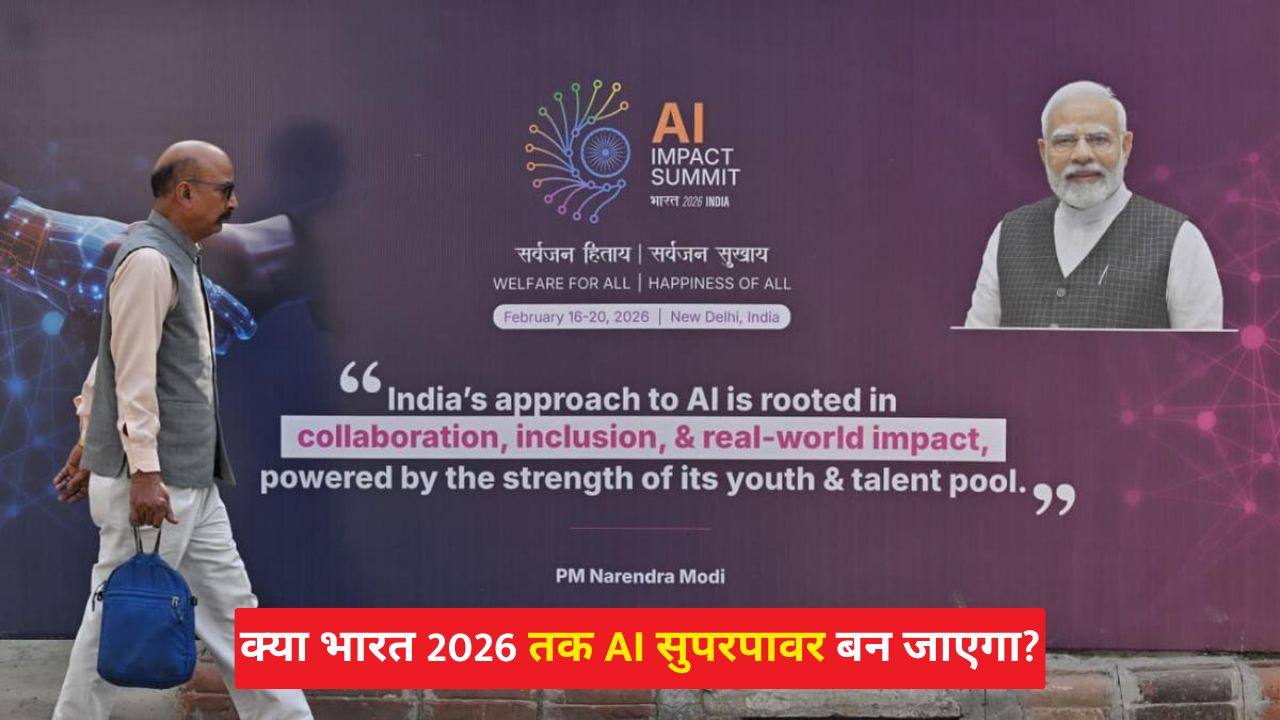
The Ai Summit 2026 Delhi has emerged as one of the most significant technology events of the year, signaling India’s intention to shape the global artificial intelligence narrative. Hosted in New Delhi, the summit brought together policymakers, global tech leaders, startup founders, and academic experts under the banner of responsible and inclusive innovation.
The event, formally known as India AI Impact Summit 2026, focused on building AI systems that are not only powerful but ethical, transparent, and aligned with societal values. Prime Minister Narendra Modi, in his keynote address, emphasized that artificial intelligence must serve humanity rather than replace it.
Major national outlets such as The Hindu and India Today highlighted the summit as a turning point in India’s technology diplomacy and economic planning.
Key Themes of AI Summit 2026 Delhi
1. Responsible AI
The central theme of the summit was “Responsible Intelligence.” The government outlined a framework built on:
- Algorithmic transparency
- Data protection and privacy safeguards
- Accountability in automated decision-making
- Bias detection and mitigation
India’s approach reflects growing global concerns around AI misuse, misinformation, and surveillance. By advocating for ethical standards early, India aims to avoid regulatory chaos later.
2. Inclusive and Multilingual AI
India’s digital ecosystem is unique due to its linguistic diversity. At the Ai Summit 2026 Delhi, policymakers announced renewed investment in AI models that support Indian languages.
This is critical because:
- Over 600 million Indians use regional languages online
- Rural digital adoption is accelerating
- Local-language AI can improve access to healthcare, agriculture, and education
The move signals that India does not want AI to remain an elite, English-dominated technology.
3. AI and Future Skills
One of the strongest announcements at the summit was the government’s commitment to future skills development.
Plans include:
- Training 10 million youth in AI-related skills over five years
- Integrating AI modules into school curricula
- Expanding partnerships between universities and industry
The employment debate around AI is complex. While automation may displace certain repetitive roles, it is also expected to generate new jobs in AI engineering, data science, cybersecurity, and digital governance.
The summit positioned skill development as the bridge between disruption and opportunity.
India’s AI Infrastructure Push
The Ai Summit 2026 Delhi also highlighted infrastructure expansion, including:
- A National AI Computing Grid
- Public-private research labs
- Dedicated AI startup funding programs
India is already the world’s third-largest startup ecosystem. With targeted AI funding, the country could accelerate innovation in:
- Healthcare diagnostics
- Agricultural analytics
- Language translation
- Financial fraud detection
The goal is clear: move from being a services hub to becoming a global AI product innovator.
Geopolitics and AI Diplomacy
Artificial intelligence is no longer just a technological issue—it is a geopolitical one. Nations are competing over semiconductor supply chains, AI chips, and data localization rules.
The Ai Summit 2026 Delhi demonstrated India’s attempt to strike a balance between innovation and regulation while strengthening international partnerships.
This strategy aligns with India’s broader economic diplomacy, including trade and technology collaborations with the European Union. For deeper insights into India’s trade direction, you can read our analysis on the India–EU Free Trade Agreement here: India-EU FTA Deal
Such partnerships could help India access advanced AI hardware, research collaboration, and cross-border digital frameworks.
Critical Perspectives and Policy Gaps
While the summit projected confidence, experts have pointed out areas requiring clarity:
- India’s comprehensive AI regulation bill is still evolving
- Data protection enforcement mechanisms need strengthening
- Independent AI oversight bodies have not yet been formalized
Technology grows faster than regulation. If India wants to lead in Responsible AI, policy execution must match ambition.
There is also the issue of digital inequality. Urban India may quickly adapt to AI transformation, but rural and marginalized communities require infrastructure support and digital literacy programs.
Can India Become an AI Superpower?
The Ai Summit 2026 Delhi has sparked debate about India’s long-term position in the global AI race.
India possesses several structural advantages:
- A massive young workforce
- A strong IT services base
- Expanding digital infrastructure
- Government-led digital public goods like UPI and Aadhaar
However, challenges remain:
- Limited semiconductor manufacturing capacity
- Dependency on foreign AI hardware
- Brain drain in advanced AI research
If India can combine ethical governance with innovation-friendly policies, it could position itself as a trusted AI partner for the Global South.
Economic Impact Projections
Industry analysts estimate that AI could contribute hundreds of billions of dollars to India’s GDP by 2030. Key sectors expected to benefit include:
- Manufacturing automation
- Smart logistics
- Precision agriculture
- Public healthcare systems
- Financial inclusion platforms
AI-driven efficiency gains could significantly boost productivity, especially in MSMEs (Micro, Small & Medium Enterprises).
Why AI Summit 2026 Delhi Matters Globally
Unlike many AI conferences focused solely on technology showcases, this summit centered on governance and social responsibility.
At a time when global debates around AI safety are intensifying, India’s positioning as a democracy advocating ethical AI gives it moral leverage in international negotiations.
The message from New Delhi was clear:
AI should not deepen inequality or undermine human agency—it should empower societies.
The Ai Summit 2026 Delhi represents more than a conference—it marks a strategic declaration of India’s AI roadmap. With Responsible AI as its guiding principle, India is attempting to balance growth with ethics, innovation with inclusion, and ambition with accountability.
Whether these commitments translate into measurable outcomes will depend on implementation speed, regulatory clarity, and sustained investment in skills and infrastructure.
For now, one thing is certain: Delhi has positioned itself at the center of the global AI conversation.
Credits: This article is based on public event coverage, official summit briefings, and media reporting from leading Indian publications.